How consulting a supplement company impacted my health journey
Sometimes doing research is transformative for the researcher. Think of it as a second-order impact.
I'd like to share a recent example of this. My team was hired to help a supplement company better understand its customers. We spoke with a diverse group of people, with varied relationships with our client's product. We created personas and proposed marketing strategies to address these personas' needs.
This project was compelling to me as someone who takes supplements. I saw that the interviewees could teach me something about my own perceptions and behaviours relating to supplements and health.
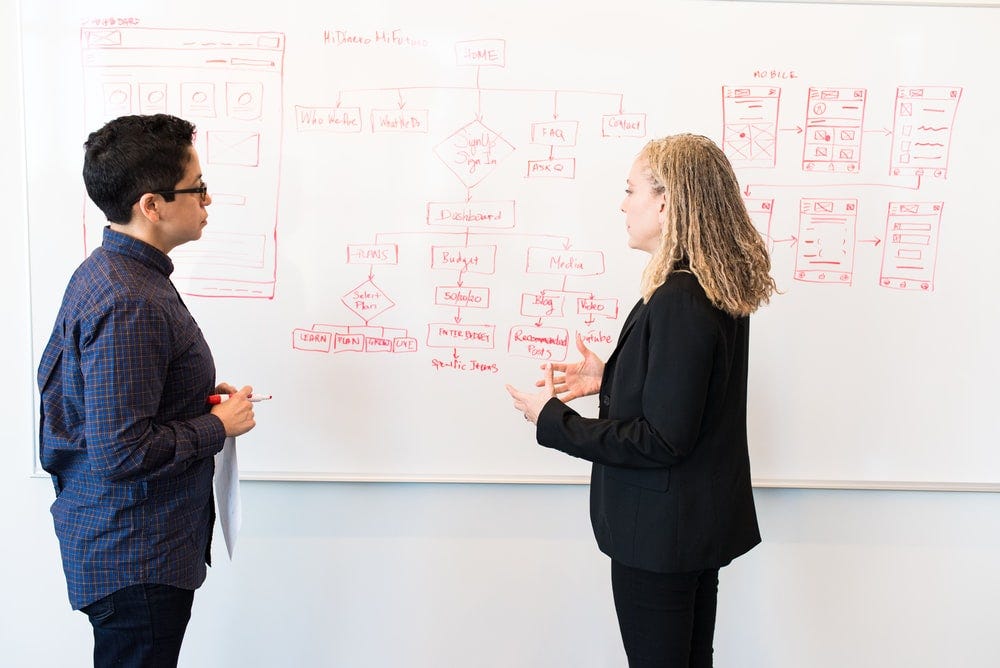
Me trying to figure out my life while I help others figure out theirs. Source.
I'll outline broad observations from the project, and tie that in with anecdotes of personal impact.
- People vary in terms of anticipated times for a supplement to work. I realized that when I begin taking a new supplement, it was often at the recommendation of someone in the health and wellness space whom I trust. I didn't have a model of how to gauge responses to the supplement apart from crude assessments of "I'm doing better with x" or "it's not helping with y." Apart from supplements with anticipated acute impacts (e.g., l-theanine, lion's mane, ETC), when a supplement has to do with health-span and quality of life, I now allow for 60 days to give it a fair shot. (Of course, a far better way of doing this is observing changes in biomarkers. One step at a time.)
- People vary in terms of their systematicity of observations. I learned that some people journal daily about the supplements they're taking, to gauge whether they're experiencing any changes. Others buy on a whim and stop with the end of the first bottle. So - I created a tracker where I note starting or changing supplements (including the brand, specifics [e.g. K2 as MK4 and/ or MK7], and why I'm taking it). I do the same with lifestyle practices. For example, I recently obtained blue-light blocking glasses (that actually block up to 550 nm of light). I know when I started using them, why I'm using them, and how to gauge outcomes (e.g., hard data with the Oura ring).
- People have different reasons for using supplements. Some folks wish to address an acute issue (e.g., healing from an injury, address arthritic pain), while others use supplements to look beautiful for as long as possible. I'm privileged to have had my ass kicked around the age of 25, which prompted me to shot-gun my desire to improve an acute issue. Now that that's been more or less been addressed, I'm entering into a new phase of health - one of maintenance and improvements.
When things weren't well, I tried an omnichannel approach: throw things at the wall and see what sticks. As I got a better hang of my wellbeing, it was time to pivot by asking: "What is my hope for my health and wellbeing, and what compromises am I willing to make to achieve this?" For example, let's say I found the perfect supplement to address x. X won't necessarily improve my quality of life for the next 20 years, but after that, my having used it will pay dividends (e.g., metformin?). Let's say this supplement costs $50 a month; $50 a month, invested and compounded at 6% annual interest will earn me an extra $10,000 in 20 years. Would I rather have that cash or the hypothetical quality of life? These are hard questions to answer, but they're now definitely top of mind.
- People vary in terms of brand-consciousness and fiscal restraint. Some people care deeply about whether a brand's a B-corp, for example. Others are concerned about fillers and added ingredients to a supplement. The two are often correlated: if a brand cares about selling a lifestyle story, it also tries to provide a clean supplement. But this costs more.
This got me thinking, "where do I sit?" I realized I'm very unloyal as a customer in the supplement category. I like convenience. I'm not in a place of financial health where I can support lifestyle brands unless there's a good return on investment. For instance, I began scoping out SEED. Their contributions to communities and research compel me, but what will probably pull the purchase trigger is being convinced by data of its impact.
On that note, I'm very conscientious when it comes to active ingredients. For example, I'll scope out fish oils with as high of a ratio of oils-to-EPA+DHA as I can. I won't buy magnesium if it's compounded as carbonate, sulfate, gluconate, or oxide. I found that companies that tend to focus on more bioavailable compounds also tend to use fewer fillers.
- People vary in terms of health practices. Some people think supplements are a panacea, while neglecting physical exercise and continuous movement, spiritual health, community, nutrition. These conversations reminded me of all the health practices I've worked to establish to this point. It also got me realizing how much farther I have yet to go.
I hope this provides a case study that moves you away from thinking that research is a passive activity designed to produce unaddressed knowledge products. Doing research, especially if honoured with the opportunity to connect with diverse others, can create a change in you, as the inquirer.
Let me leave you with some questions:
- When was the last time carrying out a research project changed you?
- To what extent do you consider being changed by a research project important, given other commitments (e.g., timelines, scope, etc.)?
- How might you help a neophyte researcher balance engaging in reflexivity (i.e., what you saw here) and providing clean, client-approvable deliverables?